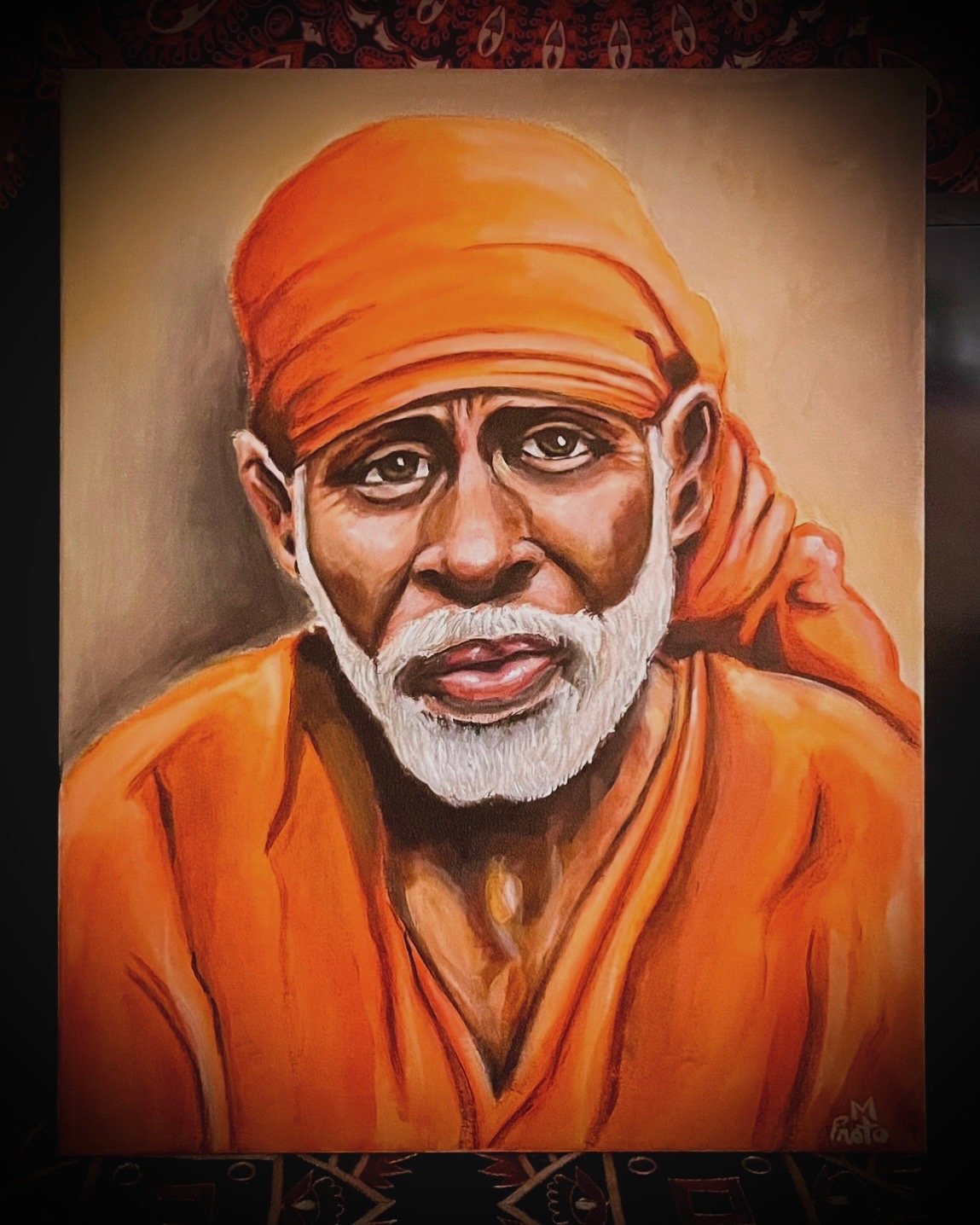
Portrait of Shirdi Sai Baba Shirdi Sai of Delaware ← Back to e-Library
e-Library · Volume One

Sri Sai Satcharitra

श्री साई सच्चरित्र

The life, the leelas, and the teachings of Shri Shirdi Sai Baba, as set down by a devotee who was given Baba's own blessing to write them.

About the book

A devotee's record, blessed by Baba

The Sri Sai Satcharitra was written by Govind Raghunath Dabholkar, a retired magistrate whom Baba affectionately named Hemadpant. Dabholkar wished to record the leelas he had seen and heard at Shirdi, and he began only after Baba consented — the account of that permission is itself the opening of the book.

He composed the work in Marathi verse across fifty-three chapters and an epilogue, finishing it in the years after Baba's Mahasamadhi; it was first published by the Shri Sai Baba Sansthan in 1930, the year after the author's own passing. The English rendering most widely read by devotees is that of Nagesh Vasudev Gunaji.

The book is not read as biography alone. Devotees treat it as satsang — sitting in Baba's company — and many read a fixed portion each day, or complete the whole book as a seven-day Parayan.

Read or listen, chapter by chapter

A companion page lists all fifty-one chapters in order — the subjects each one treats, and a free English audiobook reading for every chapter, embedded beside it. Begin at Chapter 1, or jump to the day's portion of your Parayan.

Open the chapters & audiobook  →

Reading plan

The seven-day Parayan

A Saptah — a seven-day reading — is traditionally begun on a Thursday, Baba's day, and completed on the following Thursday. One commonly followed division of the fifty-three chapters:

Chapters 1–8Baba's arrival at Shirdi and the writing of the book
Chapters 9–15Life in Dwarkamai; devotees begin to gather
Chapters 16–22Teaching through leela and through the Guru's grace
Chapters 23–29Healing, protection, and the answering of prayer
Chapters 30–37Those drawn to Shirdi from far away
Chapters 38–45The handi, the Udi, and Baba's final years
Chapters 46–53Mahasamadhi, and Baba's continuing presence

Editions and traditions divide the chapters a little differently, and some devotees keep a longer plan of one chapter a day. Any steady reading kept with Shraddha and Saburi is the right one.

While you read

Customs kept during Parayan

Beloved passages

Episodes devotees return to

The grinding of the wheat

The book opens with Baba grinding wheat one morning while the villagers watch, puzzled. The flour is carried to the village boundaries and cast there, and the cholera that had been threatening Shirdi turns back. Hemadpant takes the leela as his first lesson: what Baba does plainly on the outside is working on something else entirely.

“Aao, Sai” — the naming

Baba comes to Shirdi with Chand Patil's marriage party and steps down at the Khandoba temple, where the priest Mhalsapati greets the young fakir with the words “Aao, Sai” — welcome, Sai. The name stays with Him for the rest of His life, and with His devotees ever since.

Dwarkamai and the dhuni

Baba made His home in an old, half-ruined mosque and called it Dwarkamai — the mother who turns no one away. The fire He kindled there has never been allowed to go out, and its ash, given as Udi, went home with countless devotees as medicine, protection, and reminder that all form returns to ash.

The dakshina He asked for

Baba took small coins from those who came, and gave them away the same day. But the dakshina He truly asked of a seeker was two: Shraddha and Saburi — wholehearted faith, and the patience to wait on it. The temple's own portrait of Baba carries those two words beneath it.

Sabka Malik Ek

Hindu and Muslim devotees sat together in Dwarkamai, and Baba turned each of them back toward their own path with more devotion than they had brought. Sabka Malik Ek — one God governs all — and Allah Malik were on His lips constantly, and they remain the plainest statement of what the Satcharitra teaches.

Mahasamadhi, and after

Baba left His body on Vijayadashami, 15 October 1918. The closing chapters are given to what followed — the assurance that He would be active and answering from His tomb, and the experiences of devotees who found it to be so. It is why the book ends not as an elegy but as an invitation.

“Look to me, and I look to you.”
Shri Sai Baba

Reading a full copy

The full text of each chapter is linked from the chapters page, alongside its audiobook reading. Devotees are warmly welcome to bring their own edition — Marathi, English, Telugu, Hindi, or any other — for Parayan at the temple. If you would like help beginning a Saptah, or would like the temple's reading schedule, please get in touch.